
Ever tried homemade pizza? You are safe with the bought doughs, they are designed to result in a normal pizza that fills your stomach and tastes good. But experimenting in the kitchen can bring much tastier results and be a source of fun! There are countless recipes, how about trying this one?
For one pizza:
- 125 g or 4.4 oz fine white wheat flour
- 25 g or 0.8 oz wholemeal wheat flour (you can use also white. A bit of wholemeal flour will result in a more crispy crust)
- 80-120 ml or 2.8-3.5 oz water (start with less, gradually add more as needed)
- 10 ml or 0.4 oz olive oil
- 1 teaspoon oregano
- 1/2 teaspoon salt
- 1/2 teaspoon dry yeast (if you plan to let the dough rest in the fridge. If you need the pizza today, double, or even triple the amount) or a large teaspoon of sourdough starter from your fridge
Note: In the case, you need more pizzas and, thus, you made a lot of dough and you need to divide it, one pizza portion of fermented dough weights about 250 g or 8.8 oz.
Kneading
The kneading process is rather simple. Mix everything together. You may have already heard that it is better to add fat later when doing a fermented dough. The fat coats the gluten that develops in the mixture and thus makes it harder to get elastic dough. In this recipe, I have tried adding the oil in various stages and saw no difference. The amount of fat is not that high to cause a major problem.
Make sure you follow the instructions on your yeast package, some can be used right away, some need activation. Ideally use a spoon for the first mixing, create a clumpy mess and then leave the dough for 10-20 minutes. The flour will absorb the water and gluten will develop. The dough will quickly stop sticking to your hand and further kneading will be much simpler and quicker.
The only complication here is the amount of water. You will have to find your ideal dose, depending on your flour’s ability to absorb water and your relationship with runny dough. There are many types of flour and each has different manners when in contact with liquid, and, thus, you will have to find the balance for yourself. The dough containing a bit more water while still not sticking to everything it touches makes the best pizza.
Fermentation
The final dough that is ready to turn from a raw cold flour ball into a crispy pizza is soft to touch and with visible bubbles. It has probably doubled its size. You should see something like this:
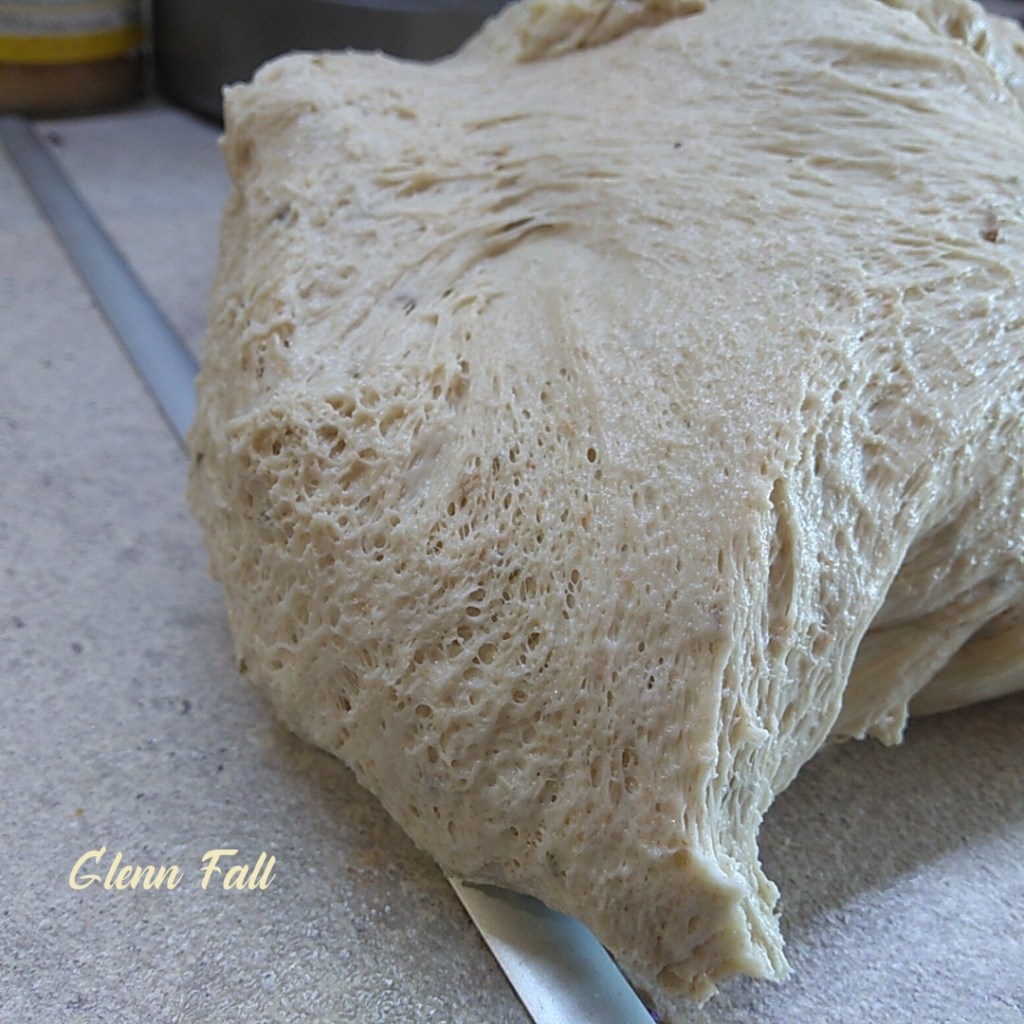
The best fermented dough needs time. My pizza turns out the best if I let the dough rest in the fridge for a day. Just make sure it is in an airproof container and let the yeast do their work. The time and cold temperature help to achieve a better dough texture and more complex flavour. It is also a bit easier to work with the cold dough right before baking. If you don’t have time for cooling the dough, let it rise for at least an hour. And don’t forget to use enough yeast.
If you choose to use the sourdough starter, do not rush it under any circumstances. The wild bacteria are shy. They need time.
Shaping
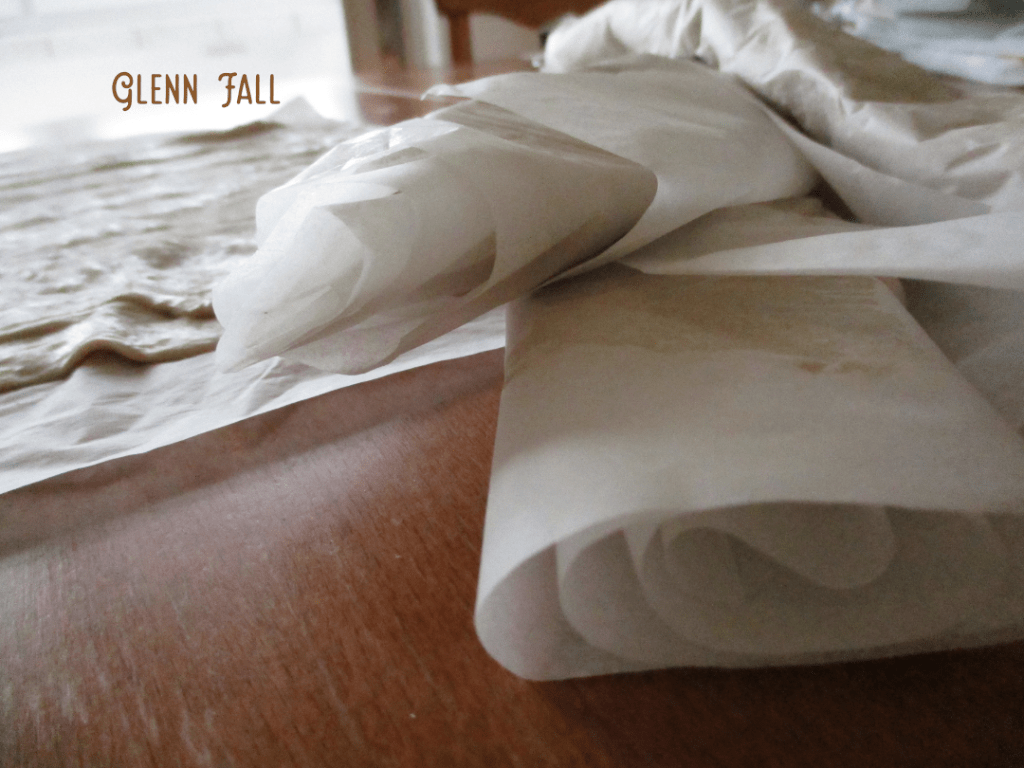
We, the home cooks, cannot be expected to do gymnastics with the dough in the kitchen, right? Right? I prefer to roll the dough into a circular shape and then pull the edges to get the dough as thin as possible and keep a bit higher edges. There is a little trick when you know you are going to be in a hurry on the baking day. Or when baking with sourdough, which really needs time. You can preshape the pizzas on a sheet of a baking paper, roll them, and let them rest in the fridge. To avoid sticking on the paper due to the liquids in the raw dough, you should generously dust the pizza with flour before rolling.
What to put on the pizza
The easiest answer is… whatever you want? I will be happy to read your favorite combination! And I don’t judge anyone for pineapple 🙂 If you are a first-time baker, remember that less is more. Especially for the start.

Baking
I am not going to lie, here comes a possible complication. You will achieve the best results with a baking stone. The thick (and heavy) stone absorbs the much-needed heat and makes the pizza crispy. You can use anything that can safely go into the oven and has a needed shape instead of a baking stone. A large and thick pan, thick metal tray… The basic idea is something that keeps a lot of heat, nothing else.
Sourdough starter and standard yeasts give different results. The yeasts will give you a more or less normal pizza, depending on how you handled the dough and the baking process. The sourdough wild yeasts result in a somewhat flatter shape and lighter color. This pizza tends to be crispier.
You also need an oven able to generate high temperature. I recommend at least 250°C or 480°F. Many ovens have a special pizza program.
If you don’t have a thick safe object to bake the pizza on or an oven that is not able to threaten your eyebrows when you open it, do not despair. You can certainly try this recipe. Just keep in mind the results will be a bit different.
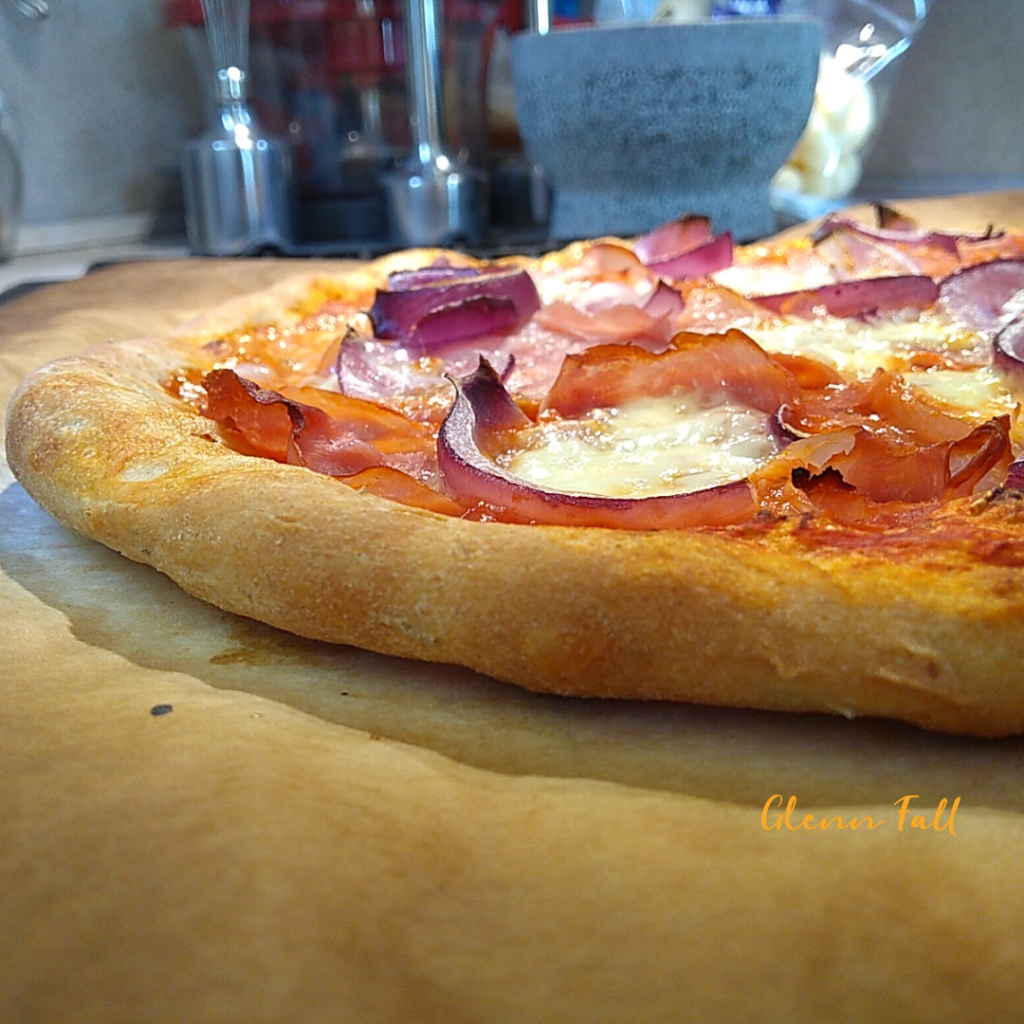
What to say now? Enjoy your pizza and here is the short story for you! You can find the whole thing in the stories section. For each recipe, there is a piece of a short story that contains a brief mention of the chosen food.
I don’t Believe, I Know
Part 3
Arthur left his office with all the material he gathered. The deep water camera screen did not dominate his desk anymore and only four scratches on the wood reminded him it once stood there. The camera itself was on its way up to be reinstalled. Dr. Fritz made sure it was in an area he considered shark-free.
Arthur looked away as some colleagues passed him.
“Hey! Arthur!” An Asian woman in a lab coat, the head of the coral recovery team, tapped his shoulder. “I’ve heard what happened last week. I am sorry. Just wanted to let you know that if you would like to talk, I’m here.”
“Oh, that is very nice, Mrs. Zhang. I will be alright, no damage done.”
“We all make mistakes.” She smiled and wrinkles around her eyes deepened. “But don’t let this discourage you. This unfortunate issue proved you have enthusiasm, don’t waste your potential.”
Arthur mumbled some phrases about being sorry, about admitting his foolishness, and he reflected on the hope to find a more reasonable topic for research.
He already lost his grants and received an email about his already accepted publications for two scientific magazines. They denied the publication, even though the paper topics had nothing to do with his latest discovery. Dr. Fritz promised to help him restart his damaged career as much as possible and already made sure Arthur did not lose his job at the institute.
Dr. Fritz waited on the rocky coast with a huge metal bucket. Fresh salty wind stung their faces. The birds flew from them as they walked and silently observed the vast blue ocean surface.
“Since I recorded that, I never felt safe in a boat,” Dr. Fritz admitted. “Of course, the chance is zero. Well, almost zero. Still…”
“At least we can’t expect a tsunami throwing a whole Meg on us.”
They laughed. The wind ruffled the ocean. Small crabs hasted on the rocks.
Dr. Fritz and Arthur found a group of large smooth rocks to sit on.
“Breaking it with rocks? Fire? Water?” Dr. Fritz suggested.
“Water seems the best. Symbolic.” Arthur shrugged. “And let’s use the stones afterwards. To be sure.”
Dr. Fritz helped him empty his evidence bag into the metal bucket. All the printed images, texts, CDs, and flash drives. He added his own recording as well.
They took the bucket to the waves together and let them pour in. The papers swelled. Bubbles left the space under the electronics.
They shared a packet of crisps and waited for the paper to get soft. They put the soggy mass into a plastic bag and broke the electronics into pieces with stones. The remains went into another bag.
They slowly walked back as the evening darkened the coast.
“You know what’s funny? I was never interested in megalodon. I love our sharks. Mako, the whale shark… Megalodon was always just a long gone fossil. But now, when he is real, damn those stupid horror movies are terrible. They always kill them.”
“But I have no idea what else I would advise to do.” Dr. Fritz frowned. “Meg is a huge predator. Can you imagine the damage to the ecosystem? And the danger to anyone venturing on the sea? I am happy we sealed our secret today. And I hope that poor beast will never surface again to end up in formaldehyde somewhere in our lab. Because that’s the best possible fate I can imagine.”
“It would suffer, I think. The change in the pressure, different water parameters, the light,” Arthur remarked.
“But it still feels good to know they are there.” Dr. Fritz took a deep breath. “They survived for so long it’s hard to comprehend such long ago times. I am happy I had the honor to glimpse them.”
“Maybe we will again. We will protect them. Watch for any sign of revelation.”
The ocean rumbled. The sun set and the first stars shyly blinked at the purple sky.

 Glenn's Nest