
Rating:
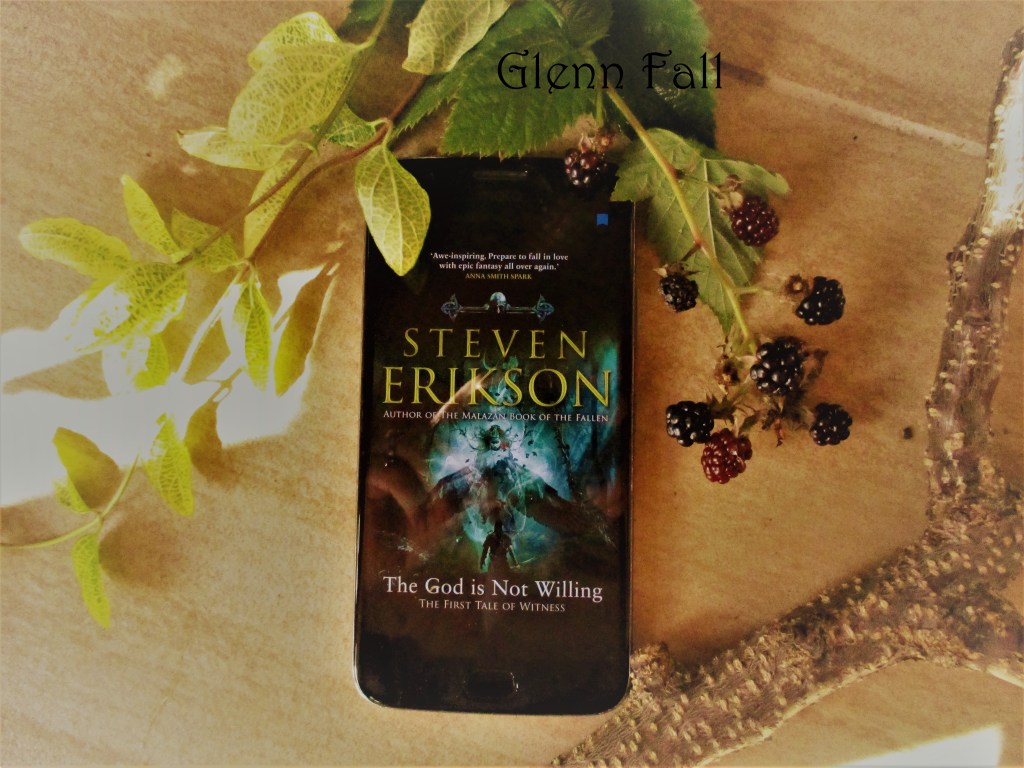
I was waiting for this book since the first announcement of the Witness trilogy. And I was not disappointed. This is not a beautiful book. But when I want to read something beautiful I go and read about Anne Shirley*. The story is a lot simpler than the Malazan Book of the Fallen. The world of Malaz has changed. We can taste it in the kelyk. We can see it in the brand new characters staring at us from the pages. Still, the book feels very familiar because the old stories, places, and characters are mentioned in small remarks and the new grows on strong roots of what was. This novel mixes fun and tragedy in balance. As usual, the characters have to make extremely hard and complicated decisions and the plot does not revolve around black and white winning heroes and losing evil lords. Philosophy that provides food for thought does not fail to fill a few decent pages.
The whole complex and rich story leads us to a very bitter and a bit sweet ending. Kindness and humanity mix with cruel necessity. Also, many things turn out different than hinted.
I really appreciated the new and much more detailed look on the Teblor culture. The previous information came mainly from Karsa. And let us be honest, during his time with the Teblor, he was a typical example of what happens when you give a know-it-all impulsive teenager a weapon and tell him it is ok to use it, rape is a relaxing activity, and collecting kills is a great idea. Now more Teblor people have their voice and we can see the already known rough and primitive parts of their culture. But also a lot of gentleness, compassion, and the importance of family… We see very smart Teblor characters with a genuine interest in studying other places and cultures and having good relationships with the world outside.
Innocence and its loss play a huge part here. Erikson pictures well how the world always preyed upon the not-knowing and from these hard nudges, comes death or learning. The innocents are the other characters’ mirrors. They can stir the best in others. Or the worst, sadly.
The Malazan marines shape the story and there are lots of them. But they are a bit different as well. What stays is that they are the source of fun. Endless fun, really. In stupid dialogues, in small actions and gestures… But they still remain a solid example of how discipline and drill are means for progress and survival. Or at least living for longer. We all know how often Malazan marines die, right? That’s the realism part. And one more thing: Can we, pretty please, get a whole book about dear darling Captain Gruff?
One thing that could be seen as a small weakness is the suspiciously frequent occurrence of the various magical places and beings that dwell there and interact with the characters. A few times, it seems these are here to artificially kick the plot forward or just instantly twist the events so they follow the right direction and reach the desired outcomes that would be otherwise impossible. But these events never cause a major discord, the reading experience still feels smooth and satisfying.
And, again, as usual, the female characters are an embodiment of… wait for it… yes, normal beings. Just like the male characters. There is no exaggerated feminism pushed down the reader’s throat. Erikson’s world is one where countless female characters smoothly show capability, power, importance in society… They are free to use their brain or physical power without restraint. Of course, many ways of oppression and injustice aimed at different beings of all sexes are present in painful and striking examples. Because the world, be it fictional or the real one, is far from simple. Or just. Or good. Still, there are female characters showing how equality is done.
This book’s release could not be better timed also because of the topics of climate change and migration. We may not realize just yet how huge the troubles awaiting us in the future might be. Just like frogs in the warmer and warmer water, we hear about the climate change and the consequent problems all the time. But are we paying attention to the news? Enough of attention? This story in The God is Not Willing takes our hand and shows us the world well known from the Malazan Book of the Fallen. If this is not our first Erikson’s book, of course. But something is changing. Slowly. Crack… Drop… Crack… Drop… We get to know the characters. We begin to like them. Or even adore them. And through their eyes, we see how devastating and soul-breaking natural disasters can be. Throughout the whole book, Erikson places cosy, beautiful, and breathtaking descriptions of nature. And then it comes. There were warnings for a long time. Just like in our real world. Can the stories of fictional migrants and brutal and messy manifestations of climate change make us, the readers, see our reality more clearly? The God is Not Willing presents how whole races and species need to react in a heartbeat to survive. And how not the strongest but the most adaptable have a chance to survive. Maybe the compassion and fear this book stirs in the readers can be applied also in our reality and we can make the world a better place by caring for each other and our Earth more.
One last note that is hard to write without a spoiler but I can’t help but highlight it. So, without a spoiler: there is a very special scene in this book that fully shows Erikson’s writing mastery. As mentioned in this review, The God is Not Willing, mixes fun, tragedy, and shows how compassion is important in the complicated cruel world. And there is a scene where all of this mixes very tightly. The few short pages are packed with so funny dialogues, deal with a deep and aching problem, and someone who evokes strong nostalgia and melancholy is surprisingly part of the scene. And there is mortal danger, of course. It was impossible to decide what to feel while reading. To laugh? To weep? To be afraid? To rejoice and then feel sad and scared again? And then someone says something funny. Reader.exe has stopped working. Perfect.
*Fine, fine. I am aware L. M. Montgomery showed some very disturbing, sad, and brutal parts of life in her writing. To name a few? Abhorrent child abuse, premature deaths of young people because of untreatable diseases, how war takes husbands, fathers, and sons from families… But these topics are mere small remarks covered with flowers. No vivid depictions of dead masses.

 Glenn's Nest